 Contact
 Subscribe

 Feb 27, 2010

Dear Kate,
We’ve now arrived at the account of Christ’s cleansing of the temple, an often-misunderstood and yet fascinating glimpse into Christ’s anger against sin. It all began when the “Passover of the Jews was at hand, and Jesus went up to Jerusalem” (John 2:13). You remember the Passover, don’t you? Every year, 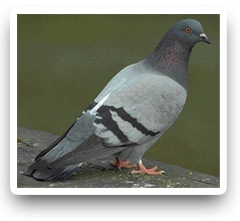 devout Jews celebrated the anniversary of it at Jerusalem with special sacrifices in the temple there. So Christ went up with His disciples to join the commemoration of it. But “in the temple he found those who were selling oxen and sheep and pigeons, and the money-changers sitting there” (verse 14). So here was a huge marketplace, complete with all the animals approved for sacrifice (on sale today!), conveniently located near the temple—actually in the temple. And to change the shoppers’ money from one nation’s currency to another, the money-changers were there as well, happy to help out in the Passover celebration—for a fee, of course. It was unbelievable—commercialism had hijacked a religious holiday! Does that sound familiar, Kate? Christmas was not that long ago.
Well, as thriving as this industry was, and as good for the Jewish economy as it was, it just didn’t sit well with Jesus Christ. The Jewish temple had been dedicated to God Himself, and called specifically a “house of prayer” (Isaiah 56:7). So Jesus Christ, highly displeased by such an injury to the purpose and dignity of the temple, took action to correct the situation. “And making a whip of cords, he drove them all out of the temple, with the sheep and the oxen. And he poured out the coins of the money-changers and overturned their tables. And he told those who sold the pigeons, ‘Take these things away; do not make my Father’s house a house of trade’” (verses 15-16).
Now I’ve heard quite a few people justify their own anger and consequent sinful behavior by citing this passage and Christ’s actions here. But that just won’t work at all. Christ’s anger was a God-centered anger, characterized by calm determination and righteous (sinless) action to restore glory rightfully due to God. And such emotion and action are perfectly in keeping with the grace—the favor and good will—that Christ always displayed. Correction of sin is motivated by good will. It was His care and favor for the people that motivated Him to clear the temple for God’s glory and the people’s good.
One of the Biblical rules on the subject of anger is found in Ephesians 4:26: “Be angry, and do not sin.” That rule addresses both the reasons for anger and the actions taken in anger. You are to be angry for God-centered reasons and take God-honoring action to promote God’s glory and agenda. And that is exactly what Jesus Christ accomplished in this passage we’re studying now. Consider these characteristics of His work in the temple that day:
- His actions were deliberate, not hasty. He did not “lose His temper,” explode, or fly into a rage. He first calmly braided a whip out of some cords that He had carefully gathered. That took some time, Kate, and lets us know that He was not in a fury or out of control. He deliberately braided a whip to use in His well-thought-out plan for cleansing the temple.
- His actions harmed no one. This is an important key, Kate, to understanding Christ’s correction of sin. He did no real harm to any of these people or even to their business. Think about it. Christ drove the animals out of the temple, but outside their owners could retrieve them again. Christ poured out the coins of the money-changers, but those money-changers could gather them up again. Christ overturned the tables, but they could be righted again. (1) You see, Kate, Christ’s anger here produced righteous action, action that rightly addressed the sin, without destroying lives or property in the process. Selling oxen and sheep was not necessarily wrong, but selling it in the temple was wrong. These people could very well have resumed their business outside the temple, and thanks to Christ, they still had everything they needed to do so. He had done them no real harm. He was actually, as always, full of grace toward them.
- His actions were guided by discretion. Christ was “consumed” with “zeal” for the temple (verse 17), but His zeal was marked by a thoughtful care of His own creatures. Look at verse 16 again: “And he told those who sold the pigeons, ‘Take these things away.’” Christ drove the large animals out with a whip, but He stopped at the table with the pigeons, and simply ordered them out. He would not use a whip on so small a creature as a pigeon, nor set them flying out of their owners’ grasp. In anger, He remembers gentleness, and He considers the frame of every single thing and person His judgment touches.
Remember, Kate, that our most important goal through this study of John is to get to know God “in the face of Jesus Christ” (2 Cor. 4:6). I think what we’ve seen here is another example of His true heart toward us, a heart of grace and kindness. And I think this account shows us how fair He is—even toward those who are wrong. And I believe that even when we fall under His judgment, and He has to correct us for sin, He’s showing us good will and favor. We’re still okay in His hands.
I love you,
Mom
(1) Matthew Henry, Matthew Henry’s Commentary on the Whole Bible (Hendrickson Publishers, Inc., 1991), 707.

 Comments Off


